
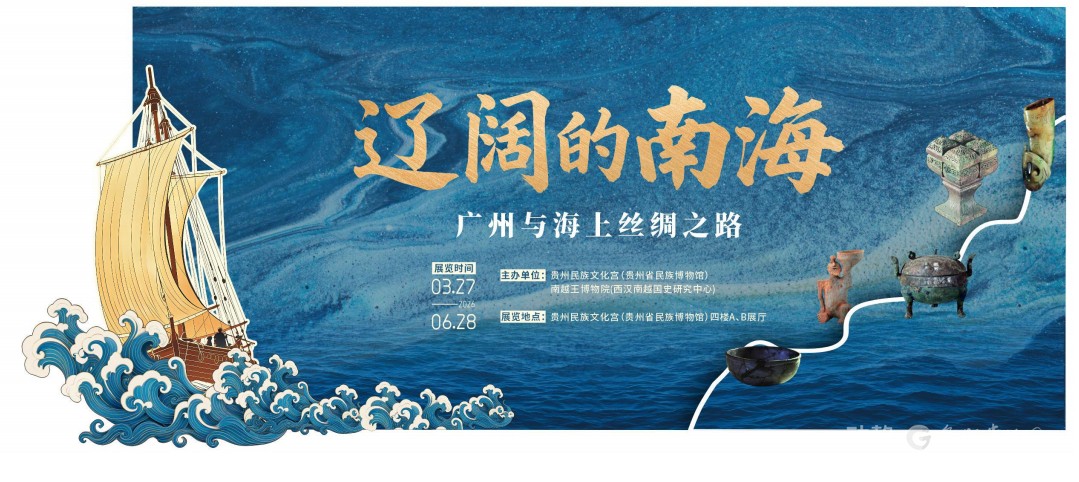
On March 27, the exhibition The Vast South China Sea: Guangzhou and the Maritime Silk Road opened at the Guizhou Museum of Ethnology in Guiyang, China. Jointly organized by the Guizhou Museum of Ethnology and the Nanyue King Museum, the exhibition traces the development of the Maritime Silk Road through a selection of 136 precious artifacts (sets).
Dating from the Western Han dynasty (202 BC–8 AD) to the Ming and Qing dynasties (1368–1911), the objects on display include ceramics, coins, decorative eave tiles and ornaments. Among them are writing implements from the Nanyue Kingdom period (204–111 BC), export porcelain from the Tang and Song dynasties (618–1276), exquisite Longquan ware from the Yuan dynasty (1271–1368), as well as blue-glazed pottery shards whose pigment came from Persian cobalt, and imported glass beads.
Together, these artifacts showcase the sophistication of ancient Chinese craftsmanship while serving as tangible evidence of exchange and mutual learning between Chinese and world civilizations. The exhibition vividly evokes Guangzhou’s historic prosperity as one of the great ports of the ancient Maritime Silk Road.
The exhibition is open until June 28.
Source: Guizhou TV