
A list of six prominent archaeological discoveries made in China last year was announced by the Chinese Academy of Social Sciences (CASS) on January 30 at the “CASS Archaeology Forum: China’s New Archaeological Discoveries of 2023”. These discoveries include the Paleolithic-era Mengxihe Site, located in Ziyang city of Sichuan province; Neolithic-era Keqiutou Ruins, located in Pingtan county of Fujian province; Neolithic-era Qujialing site, located in Jingmen city of Hubei Province; Shang dynasty (c.1600–1046 BCE) Zhaigou Ruins, located in Qingjian county of Shaanxi Province; Tang and Song dynasties (618–1279 CE) Xipang Site of a Nestorian Church, located in Turpan city of the Xinjiang Uyghur Autonomous Region; and Liao dynasty (916–1125 CE) Shangjing Ruins (“upper capital” of the Liao dynasty), located in the Baarin Left Banner of the Inner Mongolia Autonomous Region.
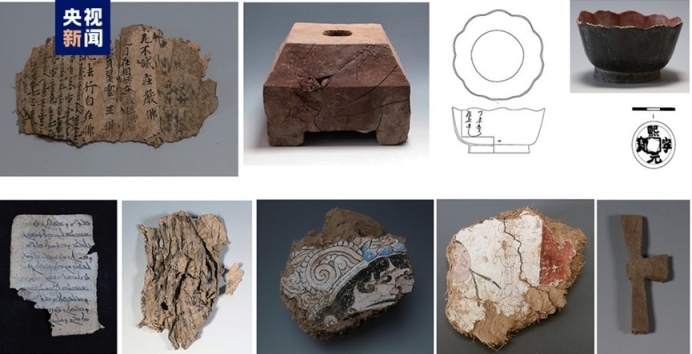
Experts at the forum explained that Mengxihe Site is a rare comprehensive Paleolithic site that has preserved a large quantity of stone tools, animals and plant remains. The Keqiutou Ruins has led to significant progress in the study of Austronesian languages, and offer concrete archaeological support in the investigation of the demographics, modes of production, and migration patterns of early Austronesian-speaking populations. The Qujialing Site is a key exemplar for research into the formation and development of prehistoric irrigated societies, as well as the origin and evolution of civilizations that have sprang from the middle reaches of the Yangtze River. The Zhaigou Ruins reveal the highly developed Bronze Age civilization in the northern Shaanxi region during the Shang dynasty. The Xipang Site provides a detailed account of life in Nestorian Christian monasteries, Nestorianism in the Middle Ages, cultural exchanges between China and other countries along the Silk Road, and the languages and scripts of China’s Western Regions. The architectural remains in the southern part of Shangjingenhances current understanding of the planar layout and historical evolution of the Liao dynasty’s imperial capital.
The following sites have been selected as finalists in the 2023 list of archaeological discoveries: Neolithic-era Yuzhuang Site of Longshan Culture located in Yexian county, Henan province; Neolithic-era Houchengzui Stone City Site located in Qingshuihe county, Inner Mongolia Autonomous Region; Shang dynasty Aristocratic Tombs located in Shuyuan street, Zhengzhou city, Henan province; Bronze Age Xia'er Yamakebu Site in Dulan county, Qinghai province; Qin dynasty (221–206BCE) ceremonial complex located in Sijiaoping, Lixian county, Gansu province; Han and Tang dynasties (202 BCE–907 CE) Mo’er Temple ruins located in Kashgar city, Xinjiang Uygur Autonomous Region; and a Jin to Qing dynasties (1115–1911) porcelain kiln site located in in Chencun village, Huozhou city, Shanxi province.
The “CASS Archaeology Forum: China’s New Archaeological Discoveries of 2023” was organized by the Chinese Academy of Social Sciences (CASS), with support from the Institute of Archaeology at CASS and other organizations.
Source: Xinhua News Agency