
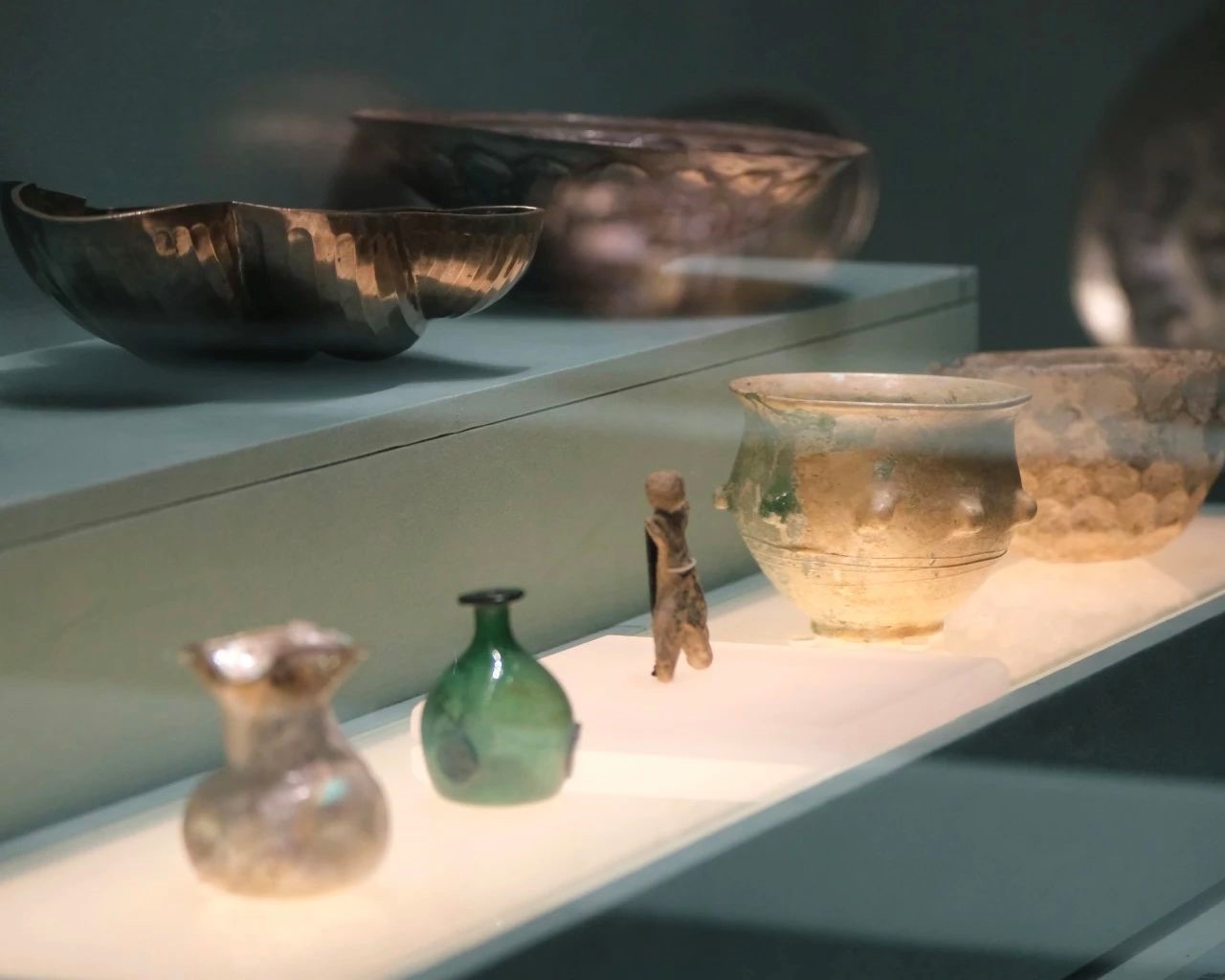
The exhibition, The Glory of Ancient Persia: Treasures from Iran, opened on December 6, 2024 at the Xinjiang Uygur Autonomous Region Museum in China. The event has been organized with the support of the National Cultural Heritage Administration of China, the People's Government of the Xinjiang Uygur Autonomous Region, and the Iran Ministry of Cultural Heritage, Tourism, and Handicrafts.
The exhibition is organized into three sections: “Dawn on the Plateau”, “An Era of Glory” and “Art of Belief”, featuring 216 artifacts from the National Museum of Iran, Persepolis Museum, Rasht Museum and Gorgan Palace Museum. The exhibits span a wide range of categories, including architecture, sculptures, ceramics, glassware, metalwork, calligraphy and paintings. Through artifacts ranging from palace architecture to household furnishings, court treasures to everyday utensils, from paintings to calligraphy, the exhibition highlights the historical legacy and artistic appeal of ancient Iran. Many of these artifacts also reflect Chinese influences, emphasizing the significant role of the Silk Road—both in the past and the present—in fostering dialogues, cultural exchanges and mutual learning, while building a community with a shared future for mankind.
China and Iran, both ancient civilizations, have been interconnected through the Silk Road since antiquity. Over two thousand years ago, an envoy of the Han dynasty, Zhang Qian, sent a deputy to visit ancient Persia. In the 13th century, the renowned Iranian poet Saadi Shirazi also traveled to China, leaving him with lasting impressions of the land. Historically known as the “Western Regions”, Xinjiang is located in northwest China, at the heart of Eurasia. The Silk Road connected ancient China to the wider world, making Xinjiang a cultural crossroads and a gathering place for diverse civilizations. Iran was recorded in Chinese historical texts as Anxi during the Western Han dynasty (202 BCE–8 CE), and as Persia after the Northern and Southern dynasties (420–581 CE). Reflecting Iran’s status as a vital link between East and West, Iranian art incorporates cultural elements from a number of different ethnicities. It has achieved remarkable success across multiple fields, leaving a lasting impact on countries and regions throughout the Eurasian continent.
The exhibition is open until March 6, 2025.
Source: Chinese Museums Association