
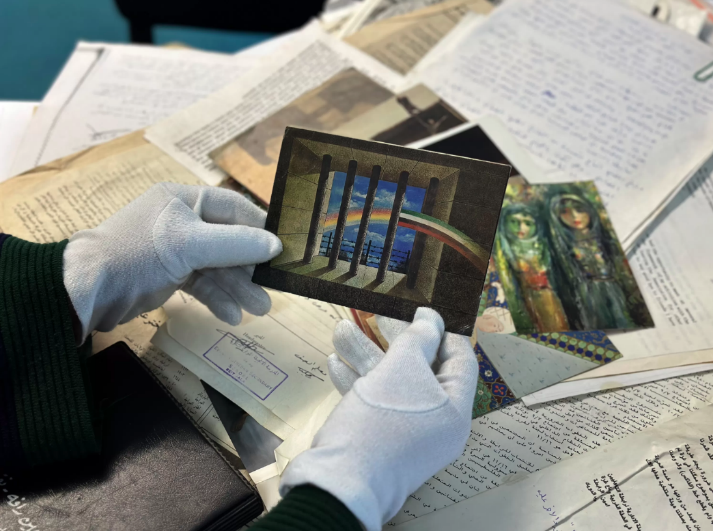
The Palestinian Museum has announced the release of over 6,000 archival items on its website as part of the third phase of its Digital Archive Project, through which more than 19,000 items have been digitized, as part of its ongoing efforts to preserve and document Palestinian social history. The project was established in partnership with the University of California, Los Angeles (UCLA) Library, with support from the Arcadia Fund, while the third phase was completed with support from the Gerda Henkel Foundation.
The new collections feature rare and rich materials documenting prominent Palestinian cultural and artistic figures, institutional collections and other collection. In addition to archiving and publishing these collections, the project team implemented complementary improvements to facilitate access and enhance user experience. These included adding a new section titled "Other Archives" to introduce related digital archives, as well as updating metadata for some collections to ensure accuracy and clarity.
Today, the Digital Archive contains more than 369,600 archival items documenting various aspects of Palestinian social history, gathered from individuals and institutions across historic Palestine, as well as from archives in Lebanon and Jordan. The archival materials include personal, family, artistic, and institutional collections belonging to writers, artists, cultural institutions, newspapers, magazines, professional associations, and others.
Commenting on the project, Palestinian Museum Director General Amer Shomali said: “The Digital Archive serves as a reference through which key milestones in Palestine’s history can be read; a preserved digital memory for future generations. Our lives, along with the buildings, places, and people around us, are under constant threat of destruction, looting, or erasure. In a reality where all components of our existence are endangered, the importance of the Digital Archive as a tool to safeguard our identity and collective memory only grows. Every document, photograph, or video we archive may one day become an invaluable historical testimony to our existence, even if its importance is not immediately apparent at the moment of archiving”.
Source: The Palestinian Museum