
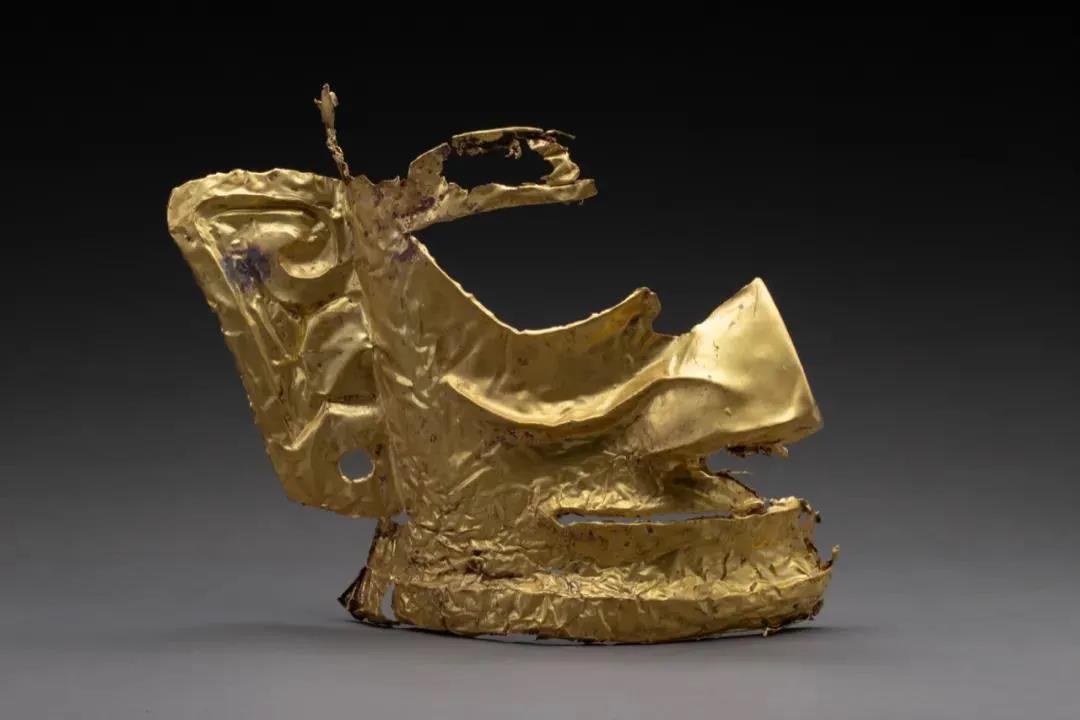
On March 20, 2021, Chinese archaeologists announced some major discoveries made during an ongoing excavation at the Sanxingdui site in Guanghan, Sichuan province. The relics were uncovered in six sacrificial pits which date back over 3,200 years. Among the important cultural finds are gold and bronze masks, bronze ware, more than 100 ivory tusks, textiles and jades, among other artifacts.
The new discoveries will enrich our understanding of the Sanxingdui site and its culture, especially the historical relations between Sanxingdui and the Yangtze River basin. They also provide new materials for the research on the historical evolution of the pluralistic integration of Chinese Civilization.
Moreover, a trove of gold artifacts excavated at the Sanxingdui site is also a vivid reflection of the unique characteristics of the ancient Shu state, which was part of the bronze civilization of the Shang dynasty; as well as the close relationship between the ancient Shu and Southeast China, Myanmar, India and West Asia connected through the South Silk Road.
Source: National Cultural Heritage Administration (abridged)