
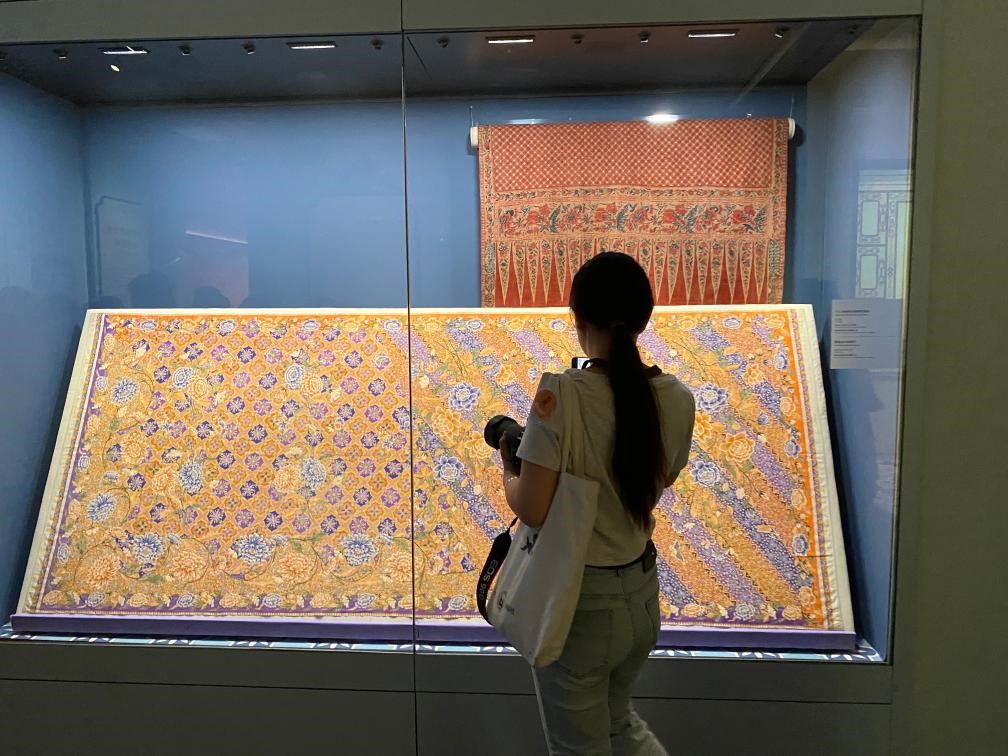
On May 29, to celebrate the 35th anniversary of the establishment of diplomatic relations between China and Singapore, the Capital Museum of China partnered with Singapore’s Peranakan Museum and Asian Civilisations Museum to launch the exhibition Exploring the World of Baba Nyonya: A Peranakan Culture Exhibition on the Maritime Silk Road.
Featuring 132 carefully selected artifacts across six thematic sections, the exhibition presents a vivid portrayal of the Peranakan community’s evolution and cultural identity. It explores the migration and integration of early Chinese settlers into Southeast Asian societies, highlights the achievements of notable individuals, and delves into the community’s unique religious beliefs, wedding customs, cuisine, daily life and artistic sensibilities. Through multimedia installations and immersive scene recreations, the exhibition offers a comprehensive view of the development trajectory and cultural heritage of the Peranakans, highlighting their creative contributions along the Maritime Silk Road.
The Peranakan culture emerged as Chinese migrants from coastal southeastern China ventured across the seas—enabled by advances in maritime technology. They settled in the Malay Peninsula, Indonesia and other parts of Southeast Asia, gradually integrating with local communities over time. This fusion gave rise to the unique Peranakan culture, where men are referred to as “Baba” and women as “Nyonya.” This community developed a unique and vibrant culture, rich in both tangible and intangible heritage, which made significant contributions to the social and cultural development of the region.
Guo Jingning, Director of the Capital Museum, remarked that Peranakan culture vividly embodies the Eastern philosophy of “harmony in diversity” and attests to the birth of new cultures from inter-civilizational exchanges. The historical experiences embedded in Peranakan culture are a valuable legacy for all humanity.
Source: Xinhua News, ChinaNews