
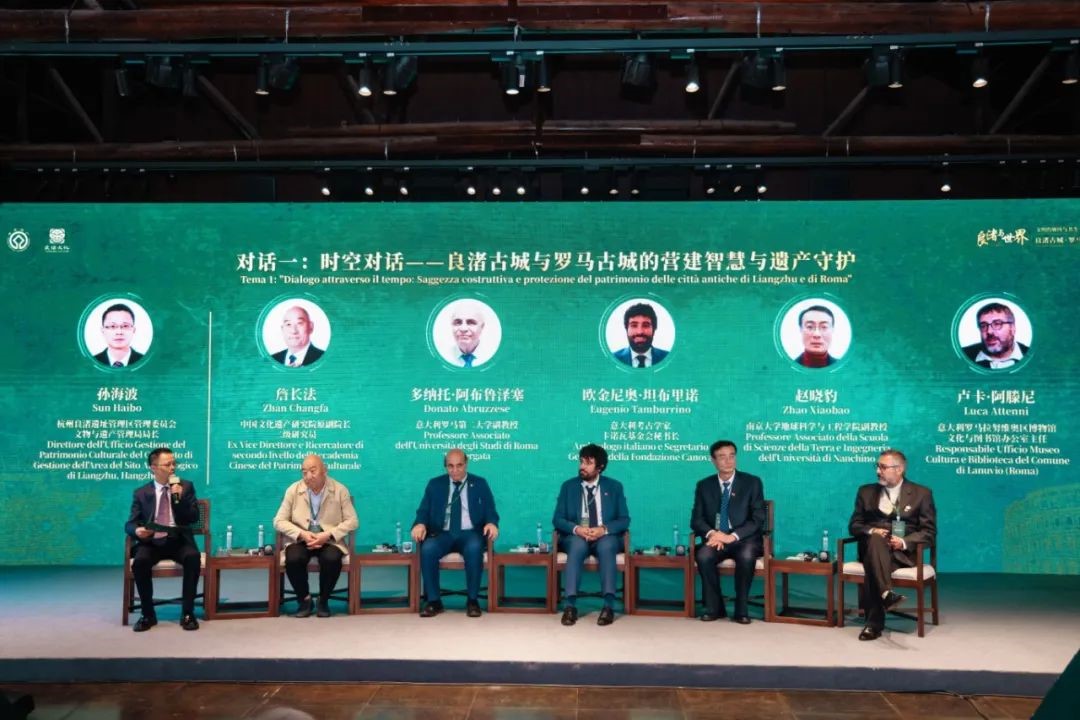
On July 6, celebrated as Hangzhou Liangzhu Day, the event Liangzhu and the World: Continuity and Symbiosis of Two Ancient Civilizations was held at the Archaeological Ruins of Liangzhu City in Hangzhou, China. Bringing together over 110 guests from China and Italy, the event focused on the theme of “Continuity and Symbiosis of Civilizations,” fostering cross-cultural dialogue on ancient city planning, heritage conservation and cultural revitalization—marking a meaningful exchange between two great civilizations across continents.
The Liangzhu ruins stand as powerful evidence of China’s 5,000-year-old civilization, highlighting the pivotal role of the Yangtze River Basin in shaping a unified yet diverse Chinese identity. As a landmark of prehistoric rice-farming culture in East Asia, Liangzhu also stands as an exemplar of early urban civilization in human history. Rome, on the other hand—boasting a history of more than 2,700 years—preserves the legacy of the Roman Empire and is recognized as one of the birthplaces of Western civilization. Its rich cultural heritage, reflected in its sophisticated city planning, advanced engineering and exquisite craftsmanship, embodies the achievements of Mediterranean civilizations and continues to influence the world today.
Despite differences in time and geography, Liangzhu and Rome share remarkable similarities in areas such as city defense, functional zoning, water resource management and urban transport planning. Both cities flourished through the collective efforts and ingenuity of their people, becoming cultural beacons in their respective regions. Their lasting impact on later political systems, economic models, institutions and worldviews affirm their status as enduring symbols of the illustrious civilizations of China and Italy.
During the event, participants shared case studies that explored the cultural characteristics, archaeological discoveries and conservation efforts of both cities. Discussions centered on two key topics: “Dialogue Across Time: The Construction Wisdom and Heritage Protection in the Ancient Cities of Liangzhu and Rome” and “Cultural Symbiosis: Creative Transformation and Evaluation of Cultural Heritage in Sustainable Development”. Both sides reached broad consensus on the importance of mutual learning and cultural exchange, expressing a shared hope to deepen dialogue and expand collaboration in the realm of world heritage.
Source: Wenboquan